Home
Home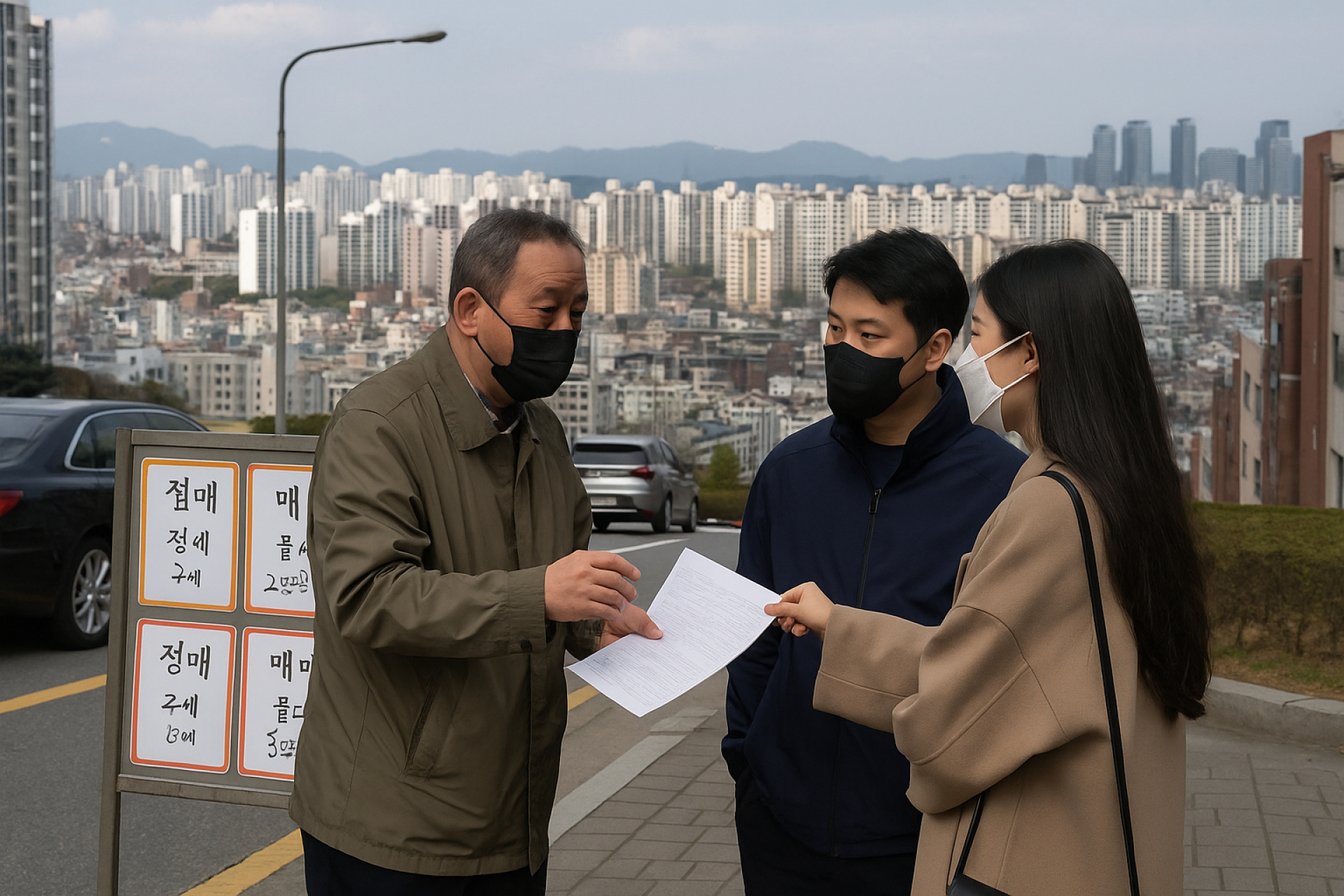
When we talk about rent in Bulgaria, almost all of us imagine the familiar scheme: monthly rent plus a deposit (usually one or two rents), which serves as a guarantee against damages and unpaid bills. However, in South Korea, there is a model that at first glance sounds strange to European logic: rent without monthly rent. This model is called Jeonse (전세) and is one of the reasons why the Korean housing market is analyzed separately from other Asian markets.
What is Jeonse?
Jeonse is a rental agreement in which the tenant pays a very large deposit upfront (at the beginning) in exchange for no monthly rent (or a symbolic one). Contracts are most often for two years, a standard that is widespread in Korea. At the end of the period, the landlord must return the deposit to the tenant (generally in full) if there are no violations of the contract.
In practice, the deposit at Jeonse is not a “guarantee” like our deposit, but the main economic part of the deal. In other words: if in Bulgaria the key flow is the monthly rent, at Jeonse the key flow is the large amount at the beginning and its return at the end.
Why does the landlord agree?
In the Bulgarian market, the logic is simple: the owner rents out the home to receive a stable monthly income. With Jeonse, the landlord's income is more "hidden": he uses the deposit as financing. Most often:
• invest the amount (in safer or riskier instruments),
• covers other debts or a mortgage,
• buys/finances another home,
• "spins" the capital into subsequent transactions.
So, instead of earning from monthly rent, the owner earns from the return on the deposit over the term of the contract. The model works best in an environment of higher interest rates or good investment opportunities, because then the deposit can bring a meaningful return.
What does the tenant earn?
For the tenant, Jeonse is often attractive because:
• does not pay monthly rent and thus “lightens” his budget,
• there is a feeling that the amount is not an expense, but temporarily blocked money,
• in a stable market, it may be more profitable than classic rent.
But this "benefit" has a condition: you need to have a large capital at the beginning. That is why in Korea there is a developed practice of loans and financial products that help finance Jeonse deposits.
The risks: why Jeonse sometimes becomes a problem
The biggest risk with Jeonse is obvious: what happens if the landlord can't return the deposit?
This can happen when:
• a decline in property prices (if the deposit is close to market value and the property no longer "covers" the amount),
• high indebtedness of the owner,
• bad investments or lack of liquidity,
• fraud (including cases where one owner takes deposits from many tenants).
Therefore, in Korea, great attention is paid to measures such as contract registration, encumbrance checks, as well as various forms of deposit protection/insurance (the details depend on the specific rules and institutions).
What is closest to the Bulgarian model?
The easiest analogy for a Bulgarian audience is: Jeonse is like deposit + rent, but "inverted".
• With us: small deposit + regular monthly rent.
• At Jeonse: huge "deposit" + almost zero monthly rent.
If we were to compare it to something more familiar financially: Jeonse is like a tenant giving the landlord an interest-free (or low-interest) loan, secured by the right to live in the apartment for two years, after which the “loan” is returned. This is not a perfect comparison legally, but it is very good as an intuition.
Even if we don’t expect Jeonse to appear in Bulgaria in its pure form, the model is an excellent example of how the housing market can be strongly influenced by the financial environment: interest rates, lending, liquidity and trust. Jeonse shows that the “rental market” is not always a simple tenant-landlord relationship, but is sometimes a complex financial system in which risk and profitability are redistributed in an unusual way.

Register for free to be the first to hear the news on imi.bg
Register