Home
Home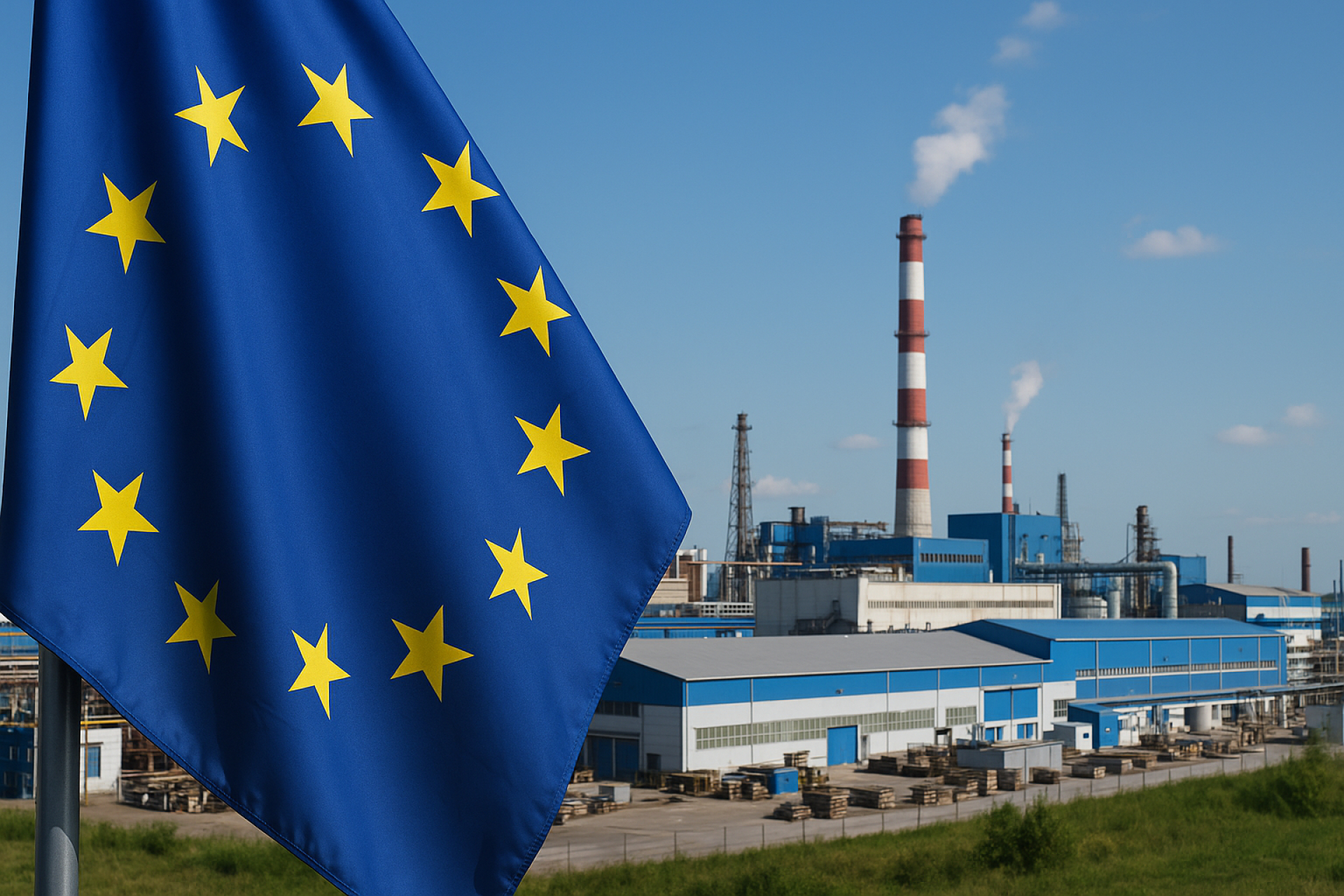
European funding plays an extremely important role in the development of industrial infrastructure in Bulgaria. After the country joined the European Union in 2007 , access to structural and investment funds opened doors for the implementation of large-scale projects in various sectors of the economy, including the industrial sector . Through various operational programs, financial instruments and support mechanisms , the EU provides opportunities for modernization, innovation and expansion of the industrial base in the country, which is essential for increasing competitiveness , sustainable development and regional cohesion.
Over the past fifteen years, a significant part of industrial investments in the country have been implemented with direct or indirect support from European funds. This includes the construction of industrial zones, the modernization of existing production facilities, the implementation of new technologies and energy- efficient solutions, as well as improving connectivity through the development of road and logistics infrastructure. In this context, European funding is not just a complement to national efforts, but a strategic instrument that shapes the direction and nature of industrial development in Bulgaria.
The Operational Programme “ Innovation and Competitiveness ” ( OPIC) has played a particularly active role , as it was the main channel for supporting small and medium-sized enterprises in the industrial sector in the period 2014–2020 . Through various application procedures , enterprises received funds for the purchase of machinery, software, equipment and services related to increasing the technological level and productivity. These investments often led to the creation of new jobs , improving export potential and strengthening ties between business and the scientific community . In the new programming period ( 2021–2027 ), the successor to OPIC – the Programme for Competitiveness and Innovation in Enterprises ( PCIE) – continues to provide funds for industrial projects, with an even stronger focus on innovation and the green transition.
However, funding through European programs is not limited to direct support for business . A significant part of the funds is also directed to public infrastructure that creates conditions for industrial development . An example of this are the industrial and technological parks built or expanded with the help of European funds - such as those in Sofia, Plovdiv, Burgas, Ruse and Stara Zagora. These zones provide investors with prepared terrain, modern infrastructure, logistical connectivity and administrative support, which makes them a preferred place for the localization of production and logistics bases.
In addition, European funds also finance strategic projects in the energy sector that have a direct impact on industry. Energy efficiency projects , the development of renewable energy sources and the modernization of the electricity transmission network support the transition of industrial enterprises to a more sustainable production model . In the context of the European Green Deal and decarbonization policies , access to such financing is key for the adaptation of Bulgarian industry to the new requirements and standards.
Last but not least , European programs also support human capital – through investments in education, training and improving the qualifications of the workforce . Initiatives such as the OP “ Human Resources Development ” finance programs for dual training, retraining and improving digital skills – increasingly important aspects for the industry, which strives for automation and integration of new technologies . This investment in people creates conditions for sustainable development of industrial enterprises and reduces the shortage of qualified personnel, which is still a challenge in some regions .
It is important to note that European funding often acts as a catalyst that attracts additional private investment. Many projects in the industrial sector are implemented through co-financing, where the EU covers part of the costs and the rest is borne by private investors or the national budget. This scheme increases the volume of investments made and helps to use public resources more efficiently . In addition , European funds stimulate the implementation of good management practices, transparency and accountability, which increases investor confidence in the project and in the business environment as a whole.
However, there are also challenges related to the absorption of European funds in the industrial sector. These include the administrative burden, complex application and reporting procedures , delays in the evaluation and disbursement of funds, as well as the limited capacity of some enterprises to manage co -financed projects . Despite improvements in recent years, there is still a need for simplification of procedures and better coordination between the different institutions involved in the process.
Another important aspect is the territorial balance of European investments. While in more developed regions such as Sofia, Plovdiv and Varna there is a concentration of successful projects and good absorption of funds, some less developed regions are lagging behind due to a lack of prepared enterprises, administrative capacity or strategic planning. This leads to uneven development and deepening of regional disparities, which is contrary to one of the main objectives of the EU cohesion policy . Therefore , in the new programming period , a stronger emphasis is placed on support for vulnerable areas and an integrated approach to regional development.
Industrial projects financed with European funds also have international significance. They are often included in trans-European networks or in cooperation initiatives between Member States . Examples of this are projects in logistics, connectivity and joint research programs. Thus, Bulgaria not only absorbs funds, but also participates in the creation of European added value, by contributing to the general economic and technological progress.
In view of the new strategic priorities of the European Union – digitalization, green transformation, sustainable mobility and circular economy – future funding is expected to be even more closely tied to the transformational nature of projects. For Bulgarian industrial enterprises, this means new opportunities , but also new requirements. To benefit from them , they need to develop innovation capacity , build partnerships with scientific and technological organizations , and think strategically about their long-term development . State policy should also be aimed at supporting this transition by creating a predictable and stimulating environment , improving public services and playing an active role in the planning of European resources .
European funding is not just a matter of money – it is a tool for modernization, for overcoming structural weaknesses and for integrating Bulgarian industry into modern European and global value chains . For many companies, access to such resources makes it possible to enter new markets, develop new products and build competitive advantages. In this sense, the proper use of European funds not only improves specific production bases, but also changes the entire industrial culture – making it more innovative, more responsible and more flexible .
The future of industrial development in Bulgaria will largely depend on how new financing instruments – such as the Recovery and Resilience Mechanism , the Just Transition Fund and other innovative EU schemes – will be used . They require not only technical preparation, but also a vision for transformation. The country has a chance to direct these funds not just to current needs, but to a strategic restructuring of its industrial base, oriented towards sustainable growth, increased added value and export orientation.
European funding is an integral part of Bulgaria 's industrial development . It not only provides resources, but also sets a framework, goals and standards that shape the future of Bulgarian industry. For this process to be sustainable and effective, it is necessary to constantly improve institutional capacity, active business participation and a strategic approach to the design and implementation of investments. Only in this way will European funds become not a fleeting injection, but a basis for a long-term transformation of Bulgarian industry.

Register for free to be the first to hear the news on imi.bg
Register